Dhanteras 2026 falls on Friday, November 6. It marks the first day of the five-day Diwali festival.
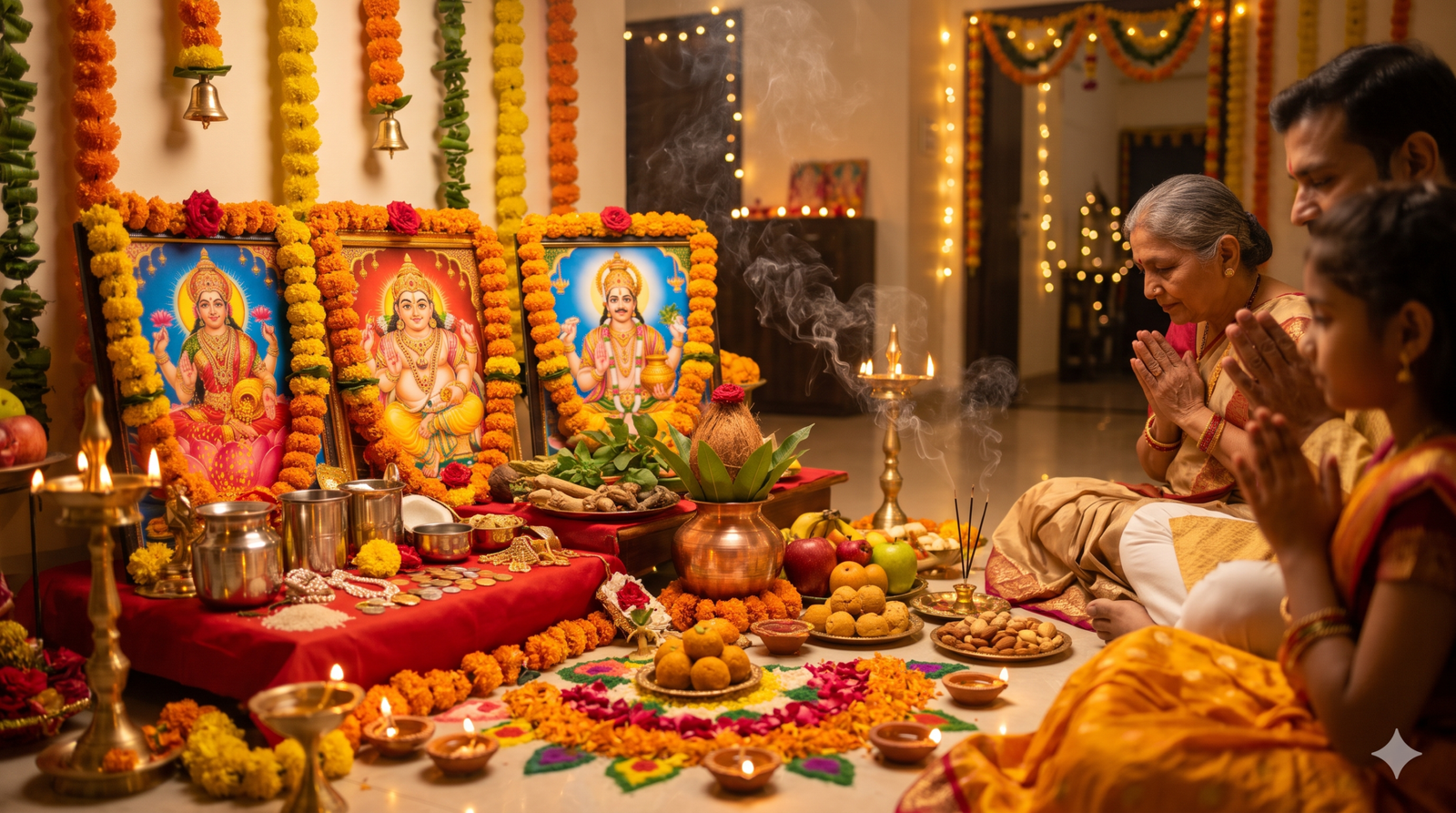
On this day, Hindus worship Lord Dhanvantari, Goddess Lakshmi, and Lord Kubera. These deities represent health, prosperity, and wealth. Together, they remind us that good health and financial stability are both important for a happy life.
Dhanteras 2026: Quick Information
| Event | Details |
|---|---|
| Festival | Dhanteras |
| Other names | Dhanatrayodashi, Dhanvantari Trayodashi |
| Date | November 6, 2026 |
| Lunar date | Trayodashi, the 13th day of Kartik’s dark half |
| Deities worshipped | Dhanvantari, Lakshmi, Kubera, and Yama |
| Main puja period | Evening, during Pradosh Kaal |
| Delhi puja timing | 5:48 PM to 7:14 PM, according to Dekho Panchang |
| Diwali | November 8, 2026 |
Note: Puja timings may vary by city and Panchang. They also depend on the local sunset time. Therefore, check with your local temple or priest before performing the puja.
What Is Dhanteras?
Dhanteras means “the thirteenth day of wealth.” The word Dhan means wealth, while Teras means the thirteenth day.
This festival marks the beginning of Diwali. It also takes place two days before the main Lakshmi Puja.
People know Dhanteras by several names:
- Dhanatrayodashi: A name linked to wealth.
- Dhanvantari Trayodashi: A name linked to health and Ayurveda.
- Kāg Tihār: A Nepali observance during which people offer food to crows.
Overall, Dhanteras highlights the value of both health and wealth. The Hindu American Foundation also discusses these important themes.
Why Are Health, Wealth, and Prosperity Celebrated Together?
The answer is simple: health, wealth, and prosperity depend on one another.
Dhanteras focuses on three important parts of life:
- Dhanvantari: Represents physical and mental well-being.
- Lakshmi: Represents prosperity.
- Kubera: Represents financial wealth and resources.
Lakshmi represents a prosperous life. Meanwhile, Kubera represents the wealth that supports it. Dhanvantari reminds us that good health allows us to enjoy our wealth.
Without good health, money loses much of its value. Similarly, without financial security, it can become harder to maintain good health.
This idea connects with the popular Indian saying, “Pehla sukh nirogi kaya.” It means that good health is the first form of happiness.
For this reason, devotees honour Dhanvantari before enjoying the festive celebrations of Diwali.
The Hindu American Foundation also notes that people from different professions celebrate their livelihoods. For example, business owners and finance professionals may worship Lakshmi. In contrast, doctors, pharmacists, and healthcare workers may honour Dhanvantari.
Legends Associated with Dhanteras
Several Hindu legends explain why Dhanteras celebrates health, wealth, and protection. These stories also help explain many of the festival’s traditions.
1. Samudra Manthan: The Emergence of Dhanvantari and Lakshmi
According to Hindu mythology, the gods and demons joined forces to churn the Cosmic Ocean of Milk. They wanted to recover its treasures and obtain the nectar of immortality, known as Amrita.
During the churning, Goddess Lakshmi emerged from the ocean. She then chose Lord Vishnu as her consort.
Lord Dhanvantari also emerged from the ocean. He carried a pot of Amrita.
This story connects Dhanteras with both health and prosperity. As a result, devotees worship Lakshmi and Dhanvantari during the festival.
The Bhagavata Purana and traditional accounts of Samudra Manthan describe Dhanvantari’s emergence. People often depict him with four arms and associate him with Amrita, medicinal herbs, and Ayurveda.
Why it matters: Devotees honour Lord Dhanvantari as the God of Medicine. They pray to him for health, healing, and protection from illness.
2. King Hima’s Son and Yama Deepam
This legend explains why many families light the Yama Deepam.
According to the story, an astrologer predicted that King Hima’s 16-year-old son would die from a snakebite on the fourth night of his marriage.
However, the prince’s wife wanted to protect him. She placed gold jewellery near the entrance and lit many lamps. She also kept her husband awake by telling stories and singing songs.
When Yama arrived in the form of a snake, the bright lights and gold dazzled him. Instead of entering the room, he stayed and listened to her stories.
By the time the predicted moment passed, the prince remained safe. Yama then left.
The Hindu American Foundation and Drik Panchang share this story.
Why it matters: The legend links lamps with protection and long life. It also explains why many families light a lamp on Dhanteras evening.
3. Goddess Lakshmi and the Farmer
Another popular story describes Lakshmi as Chanchala, which means restless or constantly moving.
In this tale, Lakshmi lived with a farmer for 12 years. During that time, his life became prosperous.
When she left, she promised to return every year on Kartik Krishna Trayodashi. The farmer then began cleaning his home and lighting lamps to welcome her.
Why it matters: This story connects with the tradition of cleaning homes, decorating entrances, and lighting lamps. It reminds devotees to prepare their homes and welcome prosperity.
4. Lord Kubera and Wealth
People traditionally know Kubera as the treasurer of the gods and the Lord of the Yakshas.
On Dhanteras, many entrepreneurs, merchants, and traders worship him. They often worship him alongside Goddess Lakshmi during the evening puja.
A popular belief says that gold bought or money invested on Dhanteras may multiply 13 times. People connect this belief with Trayodashi, the thirteenth lunar day.
However, this is a traditional belief, not a financial guarantee.
Dhanteras 2026: Muhurat and the Five Days of Diwali
Dhanteras begins the five-day Diwali celebration. Each day has its own meaning and traditions.
Here are the festival dates for 2026:
| Day | Festival | Date |
|---|---|---|
| 1 | Dhanteras | Friday, November 6 |
| 2 | Naraka Chaturdashi / Choti Diwali | Saturday, November 7 |
| 3 | Diwali / Lakshmi Puja | Sunday, November 8 |
| 4 | Govardhan Puja / Annakut | Monday, November 9 |
| 5 | Bhai Dooj | Tuesday, November 10 |
Some Panchang sources may list Govardhan Puja or Bhai Dooj on a different date. Therefore, check your local calendar before planning family celebrations.
Dhanteras Puja Muhurat
The evening holds special importance on Dhanteras. Traditionally, families perform the puja during Pradosh Kaal, which begins after sunset.
According to Dekho Panchang, the Delhi puja timing is:
5:48 PM to 7:14 PM
However, timings can vary by city. Check a local Panchang for the correct time in your area.
How Families Celebrate Dhanteras
Dhanteras traditions vary across regions and families. Still, many households follow a few common practices.
Clean and Decorate the Home
First, families clean their homes and decorate their entrances. They may use rangoli, flowers, and marigold garlands.
These decorations create a warm welcome for Goddess Lakshmi.
Perform the Evening Puja
Next, families place images or statues of Lakshmi, Kubera, and Dhanvantari in their prayer area.
They offer flowers, sweets, and lamps during the evening prayers.
Light the Yama Deepam
Many families place a lamp outside their homes, often facing south.
They light this lamp to pray for protection from premature death. This custom connects with the legend of King Hima’s son.
Purchase Something New
Many families buy gold, silver, utensils, or other metal items on Dhanteras.
Traditionally, people see these purchases as a way to welcome prosperity into their homes.
Donate to Those in Need
Diwali is also a time for charity and kindness.
For example, some families donate money, food, or essential items to people in need. The Hindu American Foundation also highlights charitable giving during the festival.
Why Do People Buy Gold, Silver, and Utensils on Dhanteras?
Buying metal items on Dhanteras is a traditional way to welcome Goddess Lakshmi and Lord Kubera.
However, families do not need to make expensive purchases. Many people buy a small coin, a steel utensil, or a brass item instead.
Dhanteras is also a major shopping event in India. Despite changes in gold prices, many people continue to buy gold on this day.
Gold and Silver Market in 2026
According to reports cited in the original article:
- On November 5, gold in Delhi stood at around ₹1,48,800 per 10 grams.
- Silver cost around ₹1,94,500 per kilogram.
- Reports expected gold and silver sales to rise by 20–30% in value.
- Silver was attracting younger buyers.
However, prices change every day. Therefore, check the latest rates before making a purchase.
Last year, gold prices reportedly rose by around 65% year-on-year. In 2025, gold reached ₹1,34,800 per 10 grams in Delhi. At the time, jewellers expected people to buy fewer items.
The main lesson is simple: Dhanteras is about welcoming prosperity, not spending more than you can afford.
If gold is too expensive, you can buy a small silver coin, a simple utensil, or even a new notebook for keeping accounts.
This is general information, not financial advice. Buy only what you can afford. Also, check the purity and hallmark of any gold item.
Dhanvantari Jayanti and Ayurveda Day: What Has Changed?
People also celebrate Dhanteras as Dhanvantari Jayanti. This day marks the birth anniversary of Lord Dhanvantari, who is closely linked to Ayurveda.
From 2016 to 2024, the Ministry of Ayush observed Ayurveda Day on Dhanteras.
However, the date has now changed.
According to reports about a Gazette notification dated March 23, 2025, the government moved Ayurveda Day to September 23. The date is now fixed instead of following the lunar calendar.
In 2026, people observed Ayurveda Day on September 23.
Dhanteras still honours Lord Dhanvantari. However, Ayurveda Day now takes place separately.
The Bottom Line
Modern life often makes us think of health, money, and luck as separate things. However, Dhanteras reminds us that they are closely connected.
The festival highlights three important ideas:
- Dhanvantari: Good health is essential.
- Kubera: We should care for and protect our resources.
- Lakshmi: We should welcome prosperity with gratitude, cleanliness, and generosity.
Dhanteras is not just about buying gold or silver. It also reminds us to value our health, protect our resources, and welcome prosperity into our lives.
Frequently Asked Questions
When is Dhanteras in 2026?
Dhanteras falls on Friday, November 6, 2026. It marks the first day of Diwali. The main Lakshmi Puja takes place on Sunday, November 8.
What are the Dhanteras puja timings in 2026?
According to the Panchang source cited in this article, the Delhi puja timing is 5:48 PM to 7:14 PM.
However, timings vary by city and Panchang. Check your local timing before performing the puja.
Which gods are worshipped on Dhanteras?
The main deities are:
- Goddess Lakshmi, who represents prosperity.
- Lord Kubera, who represents wealth.
- Lord Dhanvantari, who represents health and Ayurveda.
People also honour Lord Yama through the Yama Deepam ritual.
Why are health and wealth celebrated together?
Dhanteras connects health, prosperity, and financial stability. The traditions around Lakshmi and Dhanvantari remind devotees that wealth and well-being depend on one another.
Why do people buy gold and utensils on Dhanteras?
Traditionally, people buy metal items to welcome Lakshmi and Kubera into their homes.
Some folk beliefs suggest that wealth bought on this day will multiply. However, this is a traditional belief, not a financial promise.
What is Yama Deepam?
Yama Deepam is a lamp that people traditionally light outside their homes in the evening.
They often place it facing south and pray for protection from premature death. The custom connects with the legend of King Hima’s son.
Is Dhanteras the same as Dhanvantari Jayanti?
Yes. People also celebrate Dhanteras as Dhanvantari Jayanti.
However, Ayurveda Day now takes place separately on September 23.
When is Diwali in 2026?
Diwali falls on Sunday, November 8, 2026.
The five-day celebration begins with Dhanteras on November 6 and ends with Bhai Dooj on November 10.
Sources and Further Reading
- Diwali Day 2: Dhanteras & Dhanvantari Trayodashi – Hindu American Foundation
- Dhanteras 2026 timings and city-wise puja windows – Dekho Panchang
- Dhanvantari – Wikipedia
- Samudra Manthan – Wikipedia
- Dhanteras – Wikipedia
- Dhanteras legends – Drik Panchang
- Dhanvantari: God of Medicine, Ayurveda and Healing – Exotic India
- Centre declares September 23 as Ayurveda Day – Deccan Herald
- Govt declares 23rd September as Ayurveda Day – All India Radio
- Dhanteras 2026: Jewellers expect 20–30% rise – Free Press Journal
- Dhanteras gold buying and record prices (2025) – ETV Bharat
- Why Dhanteras remains India’s biggest gold-buying day – Business Standard
- Dhanteras 2026 complete guide and Diwali calendar – HinduTone